
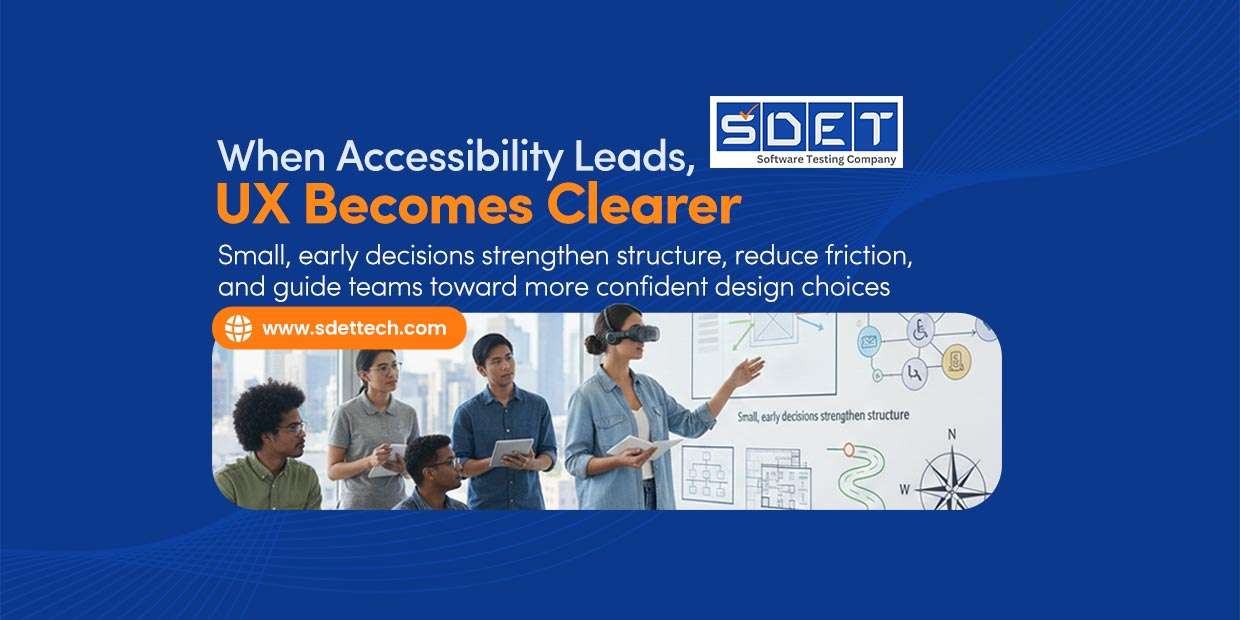
Accessibility shapes the product long before anyone notices it. Every person interacts differently: someone rushing on a mobile screen, someone relying on assistive tech like screen readers or voice navigation, someone who just needs the interface to make sense without effort. When accessibility enters the conversation from the very beginning, the product changes. Pages feel cleaner. Paths through the app stop fighting the user. Visual cues fall into place instead of competing for attention.
Accessibility becomes part of the way teams think, quietly shaping early design and engineering decisions before anything takes form. From early checks to cross-ability testing, from thoughtful automation to structured reporting, it all builds experiences that hold up, include more people, and stay future-ready. Nothing fancy. Just better systems built with intention.
How Early Accessibility Checks Influence Cleaner Interfaces
Bringing accessibility into the very first conversations of a project changes how teams see the product. When engineers view early mockups through an inclusive lens, they begin to catch small details that typically remain hidden until the final audit rush: tiny contrast gaps that affect reading comfort, spacing that makes scanning smoother, or interactions that feel predictable rather than mentally tiring. Mobile accessibility is equally essential – touch targets, responsive layouts, and screen reader compatibility need early attention to prevent usability gaps on handheld devices.
These early moments do more than improve usability; they change how the build unfolds. Designers and developers work together with a shared clarity-first approach, preventing the later scramble to fix issues once the UI has already settled. It makes the engineering path cleaner, lighter, and more intentional. In practice, these checkpoints quietly shape design reviews and technical decisions. Accessibility grows from disciplined planning and early attention, shaping the product long before it reaches its final form.
Case Example: In an enterprise project, early accessibility checks identified low-contrast buttons on mobile that were unreadable for visually impaired users. Fixing these upfront improved user engagement and reduced support tickets.
What Cross-Ability Testing Reveals About Real Interactions?
Observing how people with different visual abilities navigate interfaces reveals patterns often invisible to sighted teams. Testing designs with both sighted and visually diverse engineers uncovers where assumptions break: a clean layout can confuse when cues aren’t clear for screen readers, and seemingly intuitive flows may demand extra effort when navigated by keyboard or auditory tools.
These sessions highlight opportunities to elevate inclusivity. Cross-ability testing encourages anticipatory design, where every interaction communicates clearly across multiple sensory channels. The result is a stronger, more thoughtful system that improves usability and strengthens compliance with accessibility standards like WCAG 2.1 and 2.2.
A Hybrid Approach: Blending Manual Reviews With Automation for Wider Coverage
Manual accessibility reviews capture the nuances that automated tools miss, but relying only on them can slow progress and leave gaps as platforms grow and pairing human insight with automation changes that. Automated checks scan semantic structure, keyboard flow, ARIA attributes, and contrast across large interfaces, while manual reviewers interpret results with context and empathy.
Teams often frame audits with questions like, “How would someone with different visual abilities experience this?”, a simple habit that keeps testing human-centered. Automation handles scale and consistency, while these thoughtful, contextual reviews ensure recommendations stay practical and experience-driven. Together, they create a flow where accessibility is thorough, scalable, and genuinely meaningful.
Structured Reports for Long-Term Consistency
Accessibility is not a one-time achievement. It requires evidence-based tracking. Structured reports and certification cycles help teams maintain clarity over time and avoid regression caused by new code, new layouts, or updated frameworks. Reports align with WCAG standards and support compliance with international accessibility regulations such as ADA and Section 508. At SDET Tech, structured reporting also includes two key deliverables:
- A Defect Report that captures reproduction steps, severity, clear user impact, and detailed developer recommendations.
- A VPAT (Conformance Report) that outlines levels of conformance against relevant WCAG criteria.
These structured reports help ensure consistent accessibility across evolving products.
Why Accessibility Quietly Strengthens the Entire UX Ecosystem
Accessibility shapes the balance of the product and every user interaction within it. Thoughtful layouts ease cognitive load, clear focus indicators boost navigation confidence, semantic structure supports both SEO and automation, and predictable interactions build user trust. When accessibility is woven into the foundation, rather than added on, the system becomes more stable, intuitive, and respectful of every user.
Every perspective matters during design and engineering. Accessibility quietly guides decisions, shaping digital systems that are resilient, seamless, and naturally user-centered.
Conclusion
Every detail matters, and accessibility shapes them all. Early checks keep layouts clear, cross-ability testing uncovers real user needs, and combining manual with automated reviews brings both depth and reach. Structured reports and certificates make quality reliable, strengthening compliance and the overall experience. Across India and beyond, teams are building products that feel intuitive for everyone.
Teams can integrate structured accessibility checks within broader quality engineering workflows to ensure inclusive, reliable digital experiences.
Connect with SDET Tech to see how accessibility, quality engineering. AI-driven validation can help you create digital experiences that truly include every user
FAQ’s
How can early accessibility reviews improve page layouts for enterprise applications?
Early reviews highlight spacing, contrast, and structural clarity, which ensures that enterprise interfaces remain usable for diverse teams.
What makes cross-ability testing important for accessibility engineering?
It reveals navigation patterns that sighted-only testing cannot capture and helps refine interactions for varied visual abilities.
How should companies balance automated accessibility tools with manual inspection?
Automation provides wide coverage while manual reviews capture nuance. Blending both leads to stronger and more reliable outcomes.
Why do long-term accessibility projects require structured reports and certificates?
They preserve consistency during product evolution and ensure that new releases respect previously established inclusive design principles.
How does SDET Tech integrate accessibility with its broader quality engineering services?
Accessibility checks, structured audits, and continuous validation are integrated within SDET Tech’s engineering frameworks, including SDET360.AI and automated quality pipelines.